

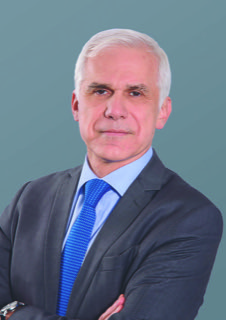
Interview with Nicola Bonucci, Associate Professor University of Paris Cité, Board’s Member Basel Institute of Governance, former OECD General Counsel.
1. Human Rights & Business: Setting the Scene
How have expectations around corporate respect for human rights evolved over the past decade at the global level ?
I would rather talk about the last 15 years as the turning point was the adoption of the UN Guiding Principles on Business and Human Rights (UNGPs) in 2011, which clearly established that companies, not just states, have a responsibility to respect human rights. Inclusion of the UNGPs in the OECD Guidelines for Multinational Enterprises was also key as it gave access to a non-judicial grievance mechanism, which is now widely used. Today more than 50 per cent of the cases in front of what are known as the « National Contact Points » concern alleged non compliance with the Human Rights Chapter of the OECD Guidelines.
In fact for many years, compliance with human rights standards by business remained purely voluntary, largely based on goodwill and reputational concerns. However in the last decade we seen a “hardening” of the expectations both in terms of legislative and regulatory frameworks but also in terms of expectations by stakeholders be they civil society, business partners and investors, employees and also public opinion. In that respect the tragic Rana Plaza collapse of 2013 was a powerful wake up call. Over the past decade the baseline expectation for companies has therefore shifted: it is no longer sufficient to treat human rights as a philanthropic add-on or PR concern. Instead, respecting human rights is increasingly seen as a core corporate responsibility, to be embedded into policy, governance, and – more importantly – operations including supply-chain management.
2. Due Diligence & Responsible Business Conduct
Where do you most often see companies struggle when they try to translate international standards (such as the UNGPs and OECD Guidelines) into the operations across the value chain?
The principles set up by international standards are pretty clear and logic. You should exercice adequate due diligence based on a risk based analysis. The due Diligence Guidance provided by the OECD request companies to :
i) Identify and assess adverse impacts: Conduct a risk assessment to identify and evaluate potential and actual adverse impacts on human rights and the environment throughout your value chain.
ii) Cease, prevent, or mitigate adverse impacts: Take action to stop or prevent activities that are causing or contributing to adverse impacts. For those impacts that are directly linked to your business but you are not causing, you should work to prevent or mitigate them
iii) Track implementation and results: Periodically monitor the implementation and effectiveness of your due diligence measures, including your efforts to prevent, mitigate, and remediate adverse impacts.
However there are situations where this is easier said than done. First, while It is recognized that due diligence is commensurate with risk and may involve prioritisation, to translate these into day-to-day operations is not always easy. Second, for identified risk in the chain, the capacity of the company to prevent and mitigate may be limited, in particular when you go down the supply chain. At the end of the day this may sometimes raise the question of what can reasonably be expected from a single company operating in a specific sector without addressing the global business model.
3. Value Chains, High-Risk Contexts & Stakeholder Engagement
Many industries operate with complex, global value chains and high-risk contexts. What are the main challenges companies face when identifying and addressing human rights risks in these environments?
I believe we should distinguish the first two situations « complex and/or global value chains » from operations in « high-risk » contexts. In the latter case, in particular if we talk in terms of conflict or fragile zones the basic question that any company should ask to itself is “do we really need to operate” in that context? And, in case the situation deteriorates once the operations have started, «can we really continue to operate » ? The ongoing case of Lafarge’s operations in Syria is a clear-cut example, but we should also keep in mind the interesting case of Telenor in Myanmar when the company decided to enter into a country that was not fully stabilized as today sadly shows.
As far as global and complex value chains are concerned, they are the day-to-day context of a number of companies. Obviously there are a number of operational challenges but, in my view, these often can be addressed in one way or the other. However, there are situations in which even well-intentioned governments may lack human or financial resources to protect human rights and companies would then be expected to act affirmatively and proactively: the use of informal labour and child labour is a typical case. Moreover, there are also situations where companies shall not merely rely on what is legal, in particular when dealing with social and cultural norms. What happened to Rio Tinto a few years ago is a perfect illustration of the point: while legal under the then applicable Australian legislation the destruction of two rock shelters of a significant cultural importance, was deemed to be unacceptable, and led to major consequences for the company.
In other words, in my view, the main challenges are not necessarily to be found in how a company identifies and addresses the risks under its control or influence but more on how the company positions itself with respect to the regulatory context in which it operates. In this respect, experience shows that while an instrument like the OECD Guidelines for MNEs indicates that it is “not intended to shift responsibilities from governments to enterprises, or from enterprises causing or contributing to adverse impacts to the enterprises that are directly linked to adverse impacts through their business relationships », this in fact may often happen if not in legal terms certainly in moral ones and in terms of accountability.
4. Governance, Culture & Accountability
How can leadership teams move beyond “tick-box” compliance and embed human rights into governance and corporate culture in a meaningful way?
There are similarities between the terms of the discussion over the fight against bribery and corruption twenty years ago and Human Rights today: same risk based approach and same tendency to look at these issues only through the compliance angle. Compliance is a necessary but not sufficient condition, even more so with respect to human rights as the scope is broader and the standards are often less specific.
If therefore we accept the idea to go beyond compliance I would argue that « tone and action from the top » are key. A leadership that does merely what is « required » rather than what it « aspires » to, will have a hard time to embed human rights in the corporate culture. On the other hand, there is nothing worse than all forms of « washing » or making strong statements not supported by action.
I also fully agree with Alison Taylor, author of a great book “Higher Ground: How Business Can Do the Right Thing in a Turbulent World » when she argues that « the most interesting problems facing business leaders today don’t fit neatly in one department. If you treat responsible business just as a reputation problem, or just as a human resources problem, or even just as a sustainability problem, you’re going to look disjointed and you’re going to fail. The challenge is bringing together branding, culture, sustainability, risk, and ethics in a way that doesn’t create a chronic lack of role clarity ».
To summarize Leaders should always keep in mind what I call the three C’s rule: be « consistent, coherent and clear » on what their vision and expectations are.
5. Future Outlook
Looking ahead, which human rights topics do you expect will receive increased attention from regulators, investors, and civil society? How can companies prepare now for these emerging expectations?
It is very difficult to be prospective given that since the beginning of the year we are experiencing a strange political moment, at least in OECD countries. Under the disguise of simplification we see a strong movement of deregulation based more on ideological terms than evidence based. The ongoing discussions on the EU Corporate Sustainability due diligence directive, are a perfect illustration of this moment. The so-called « business-case » for respecting human rights is back on the agenda both within companies and in political circles ! However, as we recently argued in a report for the Council of Europe we shall not be « trapped » by this discourse and reframe the assessment of the business case (see https://rm.coe.int/human-rights-and-competitiveness-coe-report/488028f952) . The unfolding of the events around the openings of several Shein’s boutiques in France should alert companies on the fact that not everything can be justified for pure business (i.e profit) reasons.
These two examples show that in the next few years we are likely to witness, in particular in Europe, at a decoupling between the expectations and actions of regulators and those of investors, business partners, civil society and other stakeholders including consumers. Companies may well be regularly confronted with the “lawful but awful” developed by Prof. Passas twenty years ago. Within this context, companies should take this as an opportunity to develop their own policies on business and human rights instead of trying to adjust to what is likely to be an unstable legal and regulatory context.
That said, and without underplaying the existing and recognized issues, one can expect a greater attention towards all the implications of artificial intelligence in terms of human rights. As recognized by the UN Human Rights Commissioner, Mr Turk, at the recent 14th UN Forum on Business and Human Rights in Geneva without proper checks in place, new tools like generative artificial intelligence could easily be misused. The problem is that we have no clear view of the full range of potential misuses, and this is not a comforting thought.