

Embedding sustainability in a heritage brand
By Benjamin Teisseire
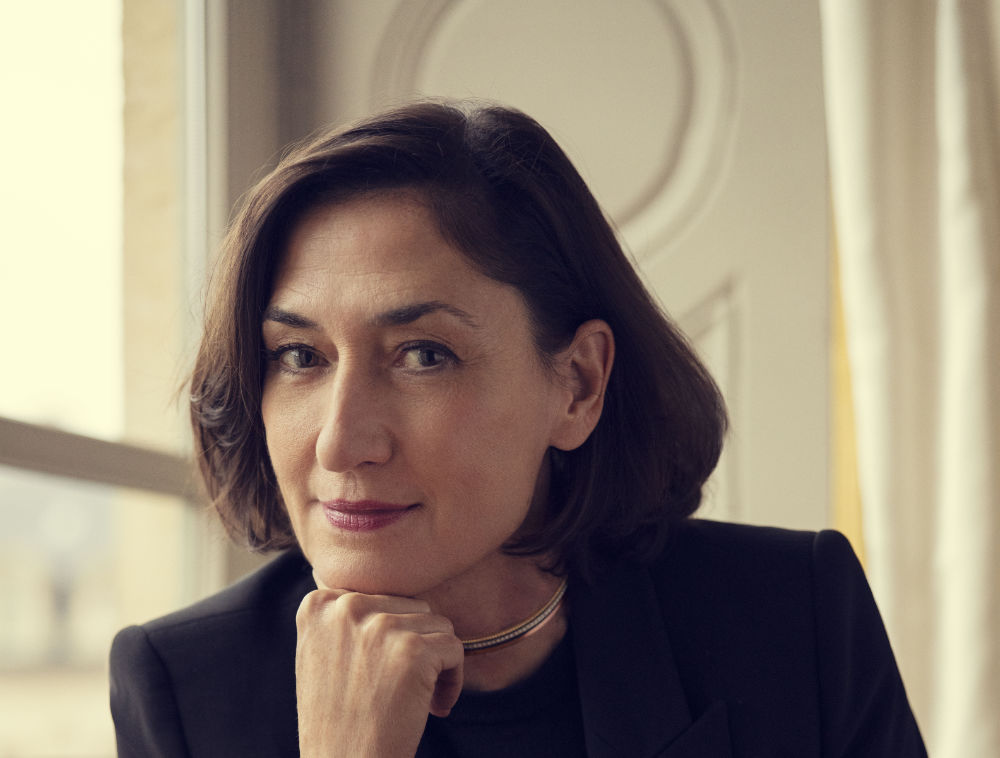
Sustainability has become a key element for all brands wishing to remain relevant and resilient in our changing world. It takes vision and courage to embed it in the core values of a brand’s identity, particularly in the luxury industry where product quality, craftsmanship and heritage often take center stage. Boucheron, part of the Kering group pioneering ESG transformation, has been quietly integrating sustainability in its business model. The Watch & Jewellery Initiative 2030 sat down with Hélène Poulit-Duquesne, CEO of the famed jewellery brand since 2015, to talk about governance, accountability and creating value through sustainability.
Why is sustainability personally meaningful to you, and how does it influence your leadership as CEO of a heritage jewellery brand?
Hélène Poulit-Duquesne: Even though I grew up on the concrete, I feel deeply connected to nature. It is my greatest source of inspiration – I regularly recharge outdoors, especially in Normandy. The natural world gives me fresh ideas, perspective, and renewed energy, and it reminds me how precious our environment is and how we must protect it for the generations to come. Therefore, it feels natural for me, as CEO, to infuse sustainability across all departments at Boucheron. I believe true progress happens when we challenge the status quo, and that’s the leadership mindset I try to instill in my teams. A great example of this is our “No pack is the new pack” initiative: by adopting an eco‑design approach and an innovative spirit, we optimized every step of its life cycle – cutting weight by four times compared to the previous version, reducing formats from 12 to 7, and streamlining from 11 components to only 2, both recyclable and natural.
Indeed, it appears effective governance is crucial in advancing sustainability. How have you structured governance within Boucheron to ensure accountability and long-term ESG success?
At Boucheron, sustainability is at the core of our business strategy. I designed a top and bottom-up governance with a dedicated team directly reporting to me. The major challenge is to embed sustainability across all departments. Central to this framework is the Sustainability Committee, a transversal team composed of sustainability leads from various departments from Operations to Media through Architecture Department. This committee plays a critical role in setting priorities, driving change, and fostering collaboration across the Maison. This governance upholds our commitments and ensures continuous monitoring of our progress. In addition, we bring together the Executive Committee and Sustainability Committee to align strategies, share insights, and reinforce collective actions during our annual seminar. The objective is to look forward, identify our next challenges, and design our vision to drive changes.
In what ways does a strong commitment to sustainability create value for your company – both strategically and operationally?
I firmly believe that sustainability is not just a trend or something strategic. It should not be a differentiator – but more of a license to operate. Actually, sustainability is at the heart of the High Jewelry industry – no one throws a diamond ring away, and our jewelry is crafted for eternity and passed down through generations. I feel we have a duty toward those future generations to ensure our jewelry is made in a way that contributes to building a better tomorrow.
What are Boucheron’s key sustainability objectives for the short, medium, and long term – specifically for 2025, 2030, and 2050?
In 2022, we unveiled our Precious for the Future strategy with some targets at the end of 2025. Regarding the ‘Where’ pillar – our raw materials – the objective was to achieve 100% traceability for key raw materials of our jewelry line. As for today, one of our highlights is that we achieved traceability for round center diamonds between 0,20 and 1 carat for bridal collections. Regarding the ‘How’ pillar – the objective is to reduce the environmental and carbon footprint of our operations. One fulfillment is that we eliminated single-use plastic consumer-facing packaging.
And finally, for the ‘Who’ pillar – our people-, one of our objectives is to constantly emphasize gender parity and equal opportunities. In 2024, we launched our first Women in Luxury Mentoring program at Boucheron, because I firmly believe that supporting women’s advancement in our industry requires concrete action, not just intentions. For longer term, we’re currently working on our next plan and definition of our objectives.
How do initiatives like the Kering Precious Metals Platform support for ASM (Artisanal and Small-Scale Mining), regenerative nature-based programs, and education funding contribute to your sustainability mission?
Thanks to Kering, we are proud of the initiative launched by the Group in 2016. Each year, we donate a premium contribution from our gold purchases to support a wide variety of projects with environmental and social ambition. At the end of the journey, the ambition is to support impactful project to thrive sustainable practices in ASM to encourage and support them in their sustainability journey. Nature project linked to mining activities are spotted by the fund and contribute directly to our environment commitment. We are proud of the reforestation project in French Guiana. We are committed with Kering and its Maisons for this long-term project to restore 100% of the gold mining sites with concrete results. Since 2018, over 100 hectares of land have been restored, and more than 227,000 trees have been planted. The Boucheron Fund for Education is a special side project, disconnected of our sustainability strategy, this is our philanthropic commitment to support the development of communities along our value chain.
Kering and Boucheron are recognized leaders in ESG, especially in advancing gender equality. Why is women’s empowerment a priority for you and for your organization?
At Boucheron, supporting women is an important value and commitment. I think that having two women taking the lead in running the Maison allows for a more empathetic leadership. Both Claire and I make it a priority to be ourselves and stick to our values while working. We are in an industry that naturally attracts female talent – the real challenge is promoting them to leading positions. Gender parity is a reality at Boucheron: our Executive Committee is 63% women, 53% of our directors, and 68% of our managers. Supporting women goes beyond words: in 2020, we established our “Precious People” Inclusion & Diversity committee, and we offer concrete programs, like our Baby Leave policy and inclusive leadership training. In 2024, we also launched our “Women in Luxury Mentoring Program”, dedicated to nurturing female talents thanks to female mentors, in which I was personally involved. In 2025, we opened it to male mentors as well.
Despite progress, female representation at the CEO level in the jewellery industry remains limited. What steps do you believe are necessary to accelerate gender parity in leadership?
This topic requires a comprehensive approach. First, we need to implement HR policies that actively support women’s advancement. We must train our teams to recognize and eliminate unconscious bias in hiring and promotion decisions. But what I find particularly crucial – and this comes from my personal experience – is the role that male leaders can play as advocates and mentors for women. I am a perfect example of this: throughout my career, I’ve had male mentors who believed in me and actively supported my progression to leadership positions. We need everyone to be involved, including men to step up as ambassadors for women’s advancement. Promoting women to leadership positions should be a natural part of how our industry operates, not just an initiative or a quota to fulfill.
What motivated Boucheron to join WJI2030, and how does this collaboration enhance your sustainability strategy?
I believe that sustainability is a shared journey, achieved through collaboration with our peers and industry stakeholders. Boucheron is actively engaged in the WJI2030 with an active contribution to create a common statement for the industry. We actively engage in collective initiatives to drive meaningful change across the jewelry sector. We are aware that change will come with common effort and commitment. In addition, the sector needs to be more transparent.
Boucheron is actively contributing to the WJI2030 Circularity Whitepaper. Why is this work important, and how are you supporting it?
We are actively contributing to the WJI2030 Circularity Whitepaper to share our experience on our new packaging, a long-term project – and it is as well an opportunity to learn from our peers. We decide to join our effort with the WJI2030 to address common issues. We know that circularity is a long-term ambition with a learning path. That is why joining our efforts to the WJI2030 is important to us to share our learnings.
What role do circularity and innovation play in Boucheron’s business model, and how are these principles embedded into your strategic roadmap?
At Boucheron, innovation has been in our DNA since 1858 – therefore, if we want to respect the past, we must continue to innovate. Claire and I share the same vision of our visionary founder Frédéric Boucheron: to constantly push the boundaries of our industry. Regarding circularity, this principle presents an opportunity to push the limits of traditional luxury standards and embrace sustainable innovation. We are inspired by Kering’s ambition to transition from a linear “take-make-waste” model to a circular economy. Circularity allows us to rethink how we produce and use resources, as well as how we extend the lifespan of Boucheron creations. A great example of when circularity and innovation meet is Jack Ultime de Boucheron, an innovative capsule unveiled in 2022. We imagined jewelry creations composed of Cofalit, a final material made of industrial waste, that we made precious thanks to our jewelry know-how.