

Circular Economy in Watchmaking
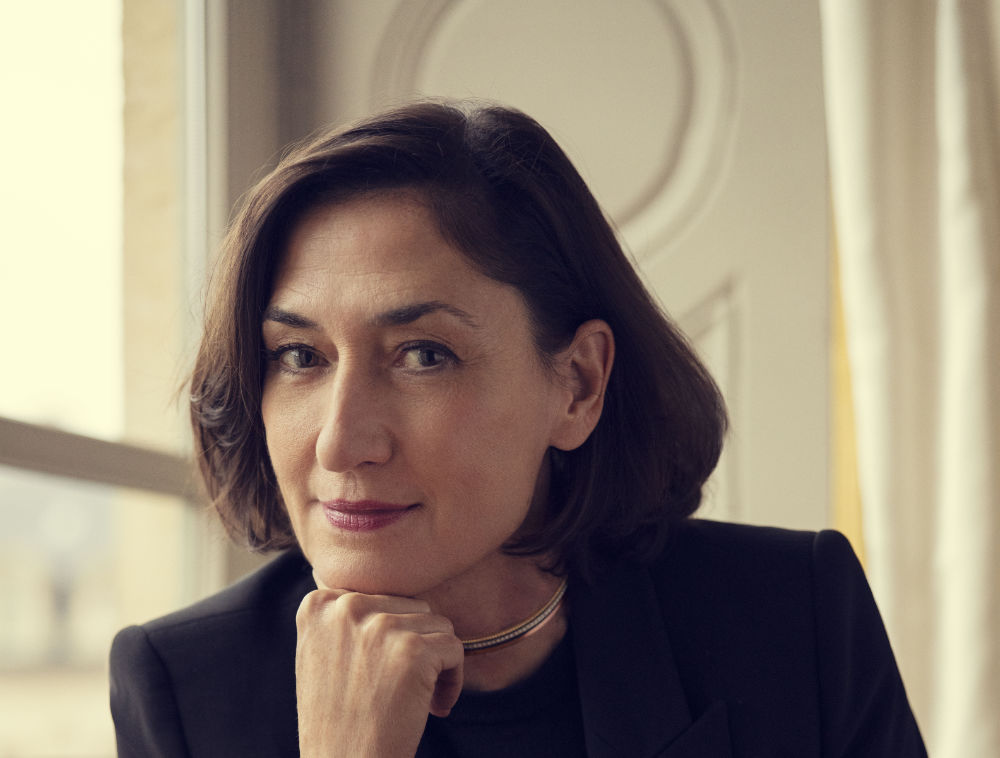
By Benjamin Teisseire
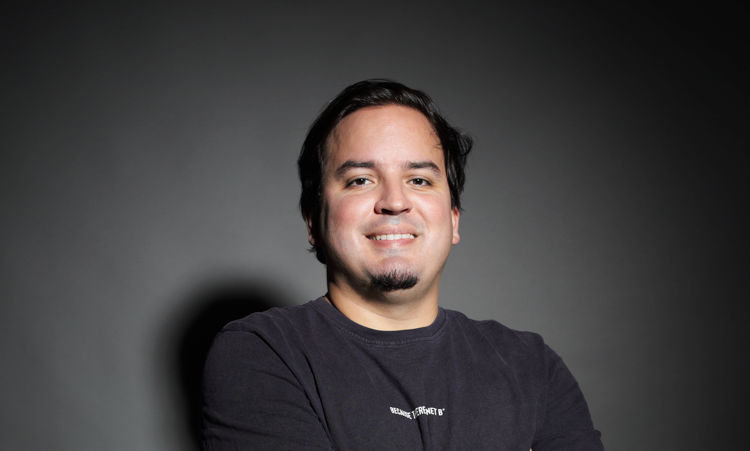
ID Genève is a young watch brand launched by crowdfunding in 2020. The circular economy approach is the founding principle for the brand. In 2023, they raised 2 millions CHF and environmental activist and famed actor Leonardo DiCaprio invested in the company. They have a long-term vision of what they would like the luxury industry to promote: to become a force for good, a driver of the needed business model transformation that our world’s challenges require. The Watch & Jewellery Initiative 2030 met with Nicolas Freudiger, CEO and co-founder, to share his views on circularity and luxury’s power to address these issues.
When you launched your brand with your two school friends, Singal Depery and Cédric Mulhauser, in 2020 did you already have circular economy in mind? Why?
Nicolas Freudiger: When we launched in December 2020, our first collection — probably the most iconic to date— was named Circular, so it embodied from scratch our vision. When I quit my job at a soft drink company in Zurich, I took on a class on circularity and realized it was a great opportunity to create value with what is already available, which some people call « stock above ground ». Even with waste, which I refer to as « surplus » or resource. This is when we decided to map out the watchmaking ecosystem around us to understand the impacts of each elements of the value chain. From there, we choose circularity. Our approach is to limit the input of new, virgin material and maintain a circular flow of resources including recovery, reprocessing and/or recycling, the latter being the last resort.
What role does innovation play in your business model?
When we speak of sustainable luxury, there is often a trade-off between desirability and circularity. Innovation plays a great part in reducing this trade-off because it is a trigger to make it more interesting in the human psyche. It adds to desirability. This is why it is very important to build new circular business models that thrive to increase this. We see ID Genève as a platform for climate solutions. A lot comes from eco-innovation. I mean innovation that is respectful of the environment, that does not increase what we take from nature. In the future, I hope every innovation will be apprehended this way. It is far from being the case today. Innovation should be here to solve climate-related problems, first and foremost. Luxury is in a great position to embody this approach. It has the power to inspire and drive the business’s transformation.
Circular economy is based on eco-design, minimizing environmental impact from the onset of production. But it also engulfs the complete life cycle of the products. What is ID Genève’s cradle to cradle approach?
From the very start of the company, we included our RE platform. It is based on three pillars. The first is the traditional maintenance of your watch, to have it repaired when needed. Second comes the modular aspect of it. Beyond changing straps, we offer changing other elements like the bezel, the dial, inserts on the side to extend the desirability of the watch so that people will wear it longer. The third pillar is a cash back option. The owner can decide to sell it back to the community at a fair price, then ID Genève certifies it « RE » and offers it on its platform. We actually sold our first watch this way earlier this year. And it sold at the same retail price as a new watch, because we include the cost of refurbishing. It does not get more circular than that. It appeals a lot to our community.
Do you envision other consumption models, like renting for example, as well?
We are exploring this because it is important that we change the public’s view on these new consumption models. Is it right for the luxury industry? We don’t know yet. It could be linked to an overall experience when renting a room in a hotel or a car that would include a watch to go with. It needs to be easy. There is definitely a path to explore.
ID Genève is a small company, selling less than 1’000 watches a year. Still, you published your first impact report in 2025. Why is it important for you?
The industry has been there for centuries, so we have a very humble approach. We just released our first impact report earlier this year. We first try to understand our products, their impacts, where we can make a difference. As a young brand, we have a small team, our footprint is limited but our convictions are big and we want to be very transparent. So we disclose all our impacts on our first three collections Circular 1, Circular S and Circular C. At this point, 8.6% of what we use comes from extracted « virgin » materials. Our aim is to tend towards zero. We realize that circularity is a journey that takes commitment and perseverance. We have been overwhelmed by the response of the people out there rooting for us based on our goals and authentic disclosure. So yes, we are very proud to have published our first impact report this year.
Obviously, being only five year-old, we have other priority, one being to survive! But it makes sense to report in a non-compliance way. It is also part of how we tell our story of who we are and our future intentions. We like our tagline « Rebels With A Cause ». We want to create a movement that supports and inspires the industry.
There are five pillars on which we are building this movement. The first one is Dare. We need to be daring to push our vision. The second is Sharing. It is not about reinventing the wheel, but about co-creation. This is where the added value to the industry will stem from. Third is Owning. Owning your decisions, taking responsibility for them, being accountable. It is about transparency, traceability for the public. Four is about Preserving, minimizing our impacts and this is where circularity is key. It is the biggest challenge for the generations to come. Last but not least, Speak Up, we need to be advocates of the greater cause, we need to be unafraid of speaking up and voicing our concerns and what we have to do to preserve the world for future generations. We want the industry to inspire the change needed and promote credible alternatives to existing business models.
Doing all this work, we also see clearly that we cannot do it alone, that collaborations are essential.
Indeed collaborations seem to be inevitable if companies are to transition to a more sustainable business model. What is your view on the topic? Are you joining some of them, like the Watch & Jewellery Initiative 2030?
I fully agree and our second pillar Sharing is all about that. We talk to a lot of brands and NGOs since our very beginning. I am thankful to the Watch and Jewellery Initiative 2030 and admire the work they are doing. I have learned a lot through their events and open assets. They have created a great learning community of small and big companies. Likewise, through more than 10 active collaborations, we develop new narratives for the watchmaking industry. We reinvest 50% of our revenue into those partnerships, thus amplifying their impact. We are an active member of the WE, the Watchmaking Ecodesign consortium. This initiative focuses on developing environmental knowledge specific to the Swiss watchmaking industry, providing the foundation for more sustainable practices. The more companies join these types of initiatives, the better we will advance on this journey to a more sustainable business model. The solution really lies in creating a community intelligence, sharing data, learning from each other. Now is the time to act. It does challenge the industry secretive mindset and it is easier for a newcomer like us to choose this path, but the hope is that it triggers change throughout the industry and beyond. The WJI2030 also plays an important role in nurturing newcomers that can challenge and inspire the industry.
Your business model is different than standard, purely financial, ones. How do you evaluate your performance? What are the KPIs you use?
To go into very operational considerations, we have five main objectives per quarter. Some financial ones, others not financial at all. For example, we believe strongly in the importance of voicing our message and convictions, so we monitor the visibility of our innovative collaborations. Today 60% of them are featured on our partners’ website. We also want to invest 50% of our revenues in collaborations with partners. We collect the environmental data of all our supply chain. We also monitor the percentage of extracted material in our production to minimize it. At this point we have achieved 8.6%,
taking into account the watches, the packaging and merchandising. We also track our use of renewable energies, as well as the quantity of plastic we use. We measure the distance between our suppliers and our production site. We also determine the percentage of vegan products we use which minimizes our biodiversity footprint. Basically, we measure everything we can to minimize our impacts. This is a huge part of evaluating our performance to be aligned with our convictions and transparent with our claims.
With everything that you are doing, how would you define your company’s purpose today and how do you see ID Genève’s future?
My personal purpose is to be a good human being. Business wise, we started as ID watch, now we are ID Genève and the goal is to become ID as a brand. Our aim is to place the luxury industry at the center of the ecological transition. It is very ambitious. We envision a world where every laboratory in the luxury industry is actually working on tackling environmental issues. The idea is to use luxury’s power of inspiration for the good of the world. This is our ambition for ID Genève and it goes further than just a watch brand. Our next chapter of A series investment that we will launch before the end of the year will be based on this long term vision. We want to create a Lab that will be a circular innovation hub in Geneva by the end of 2025. It is the start of the next phase for us.